Regional Cuisine2 min read
Kacchi or Pakki? Hyderabadi and Lucknowi Biryani, Explained
Two royal kitchens, two philosophies of dum. Here's what separates the fiery Hyderabadi from the fragrant Awadhi biryani.
Chef Arjun Mehra · Executive Chef ·
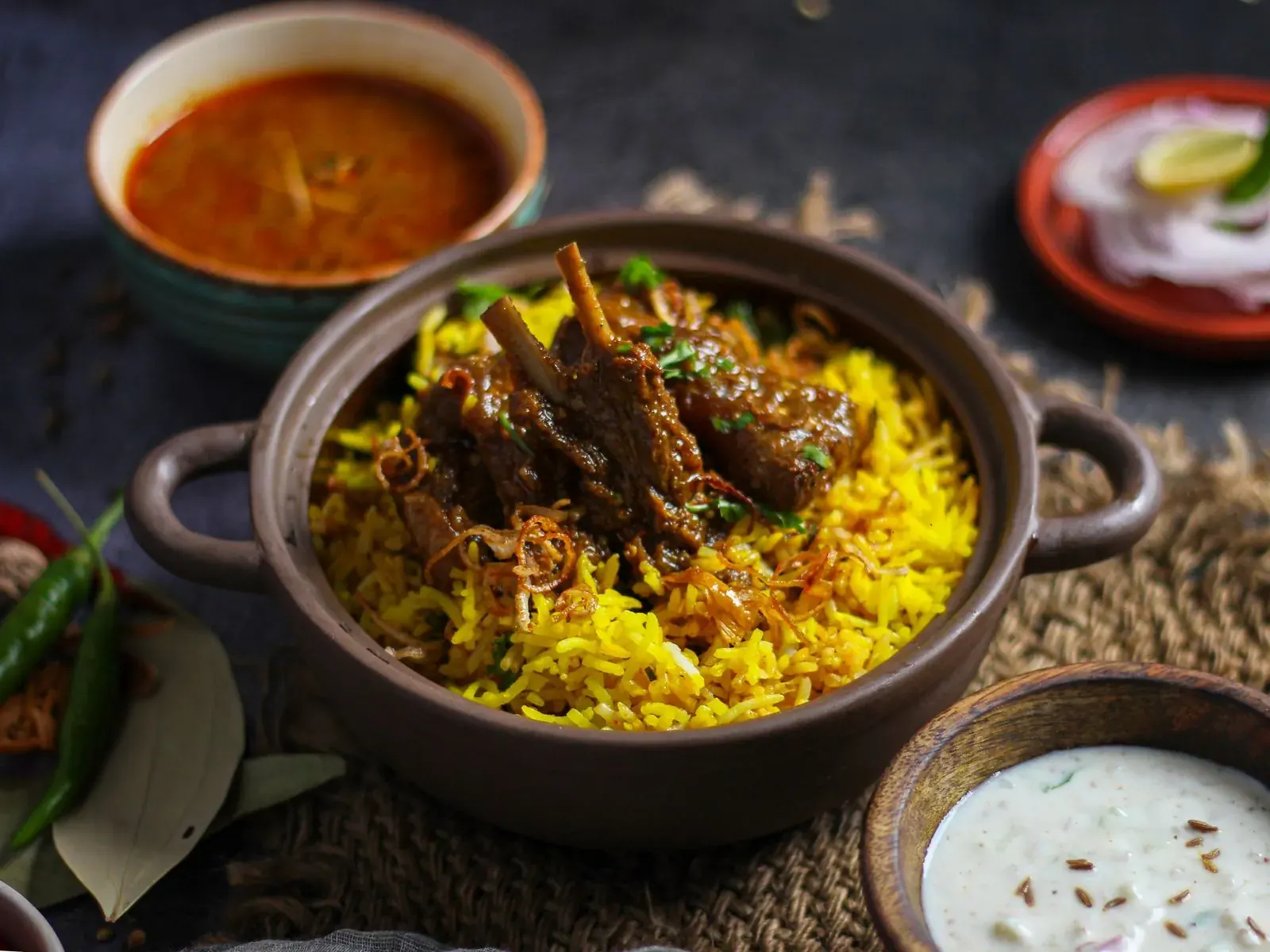
Biryani is not one dish but a family of them, and the two most famous branches grew up in royal kitchens a thousand kilometres apart: the Nizams' Hyderabad and the Nawabs' Lucknow. Both cook on dum — in a pot sealed with dough so the steam can't escape — but they disagree on almost everything else.
Hyderabadi: kacchi, or raw
In a kacchi biryani, raw meat marinated in yoghurt, fried onions, green chilli, mint and spices goes into the bottom of the handi. Part-cooked rice is layered on top, then saffron milk and ghee. Sealed, the pot cooks the meat and rice together, so the rice absorbs the marinade from below. The result is bold, spicy and deeply savoury.
Lucknowi: pakki, or cooked
Awadhi cooks prized restraint. The meat is first cooked in a spiced stock called yakhni, and the rice is cooked in that same stock. Only then are the two layered with kewra, rose water and saffron, and finished on dum. The flavour is subtle and perfumed rather than fiery.
- Hyderabadi — raw marinated meat, more chilli and mint, served with mirchi ka salan and raita.
- Lucknowi — meat cooked in yakhni first, scented with kewra and rose, served with burani raita.
- Both — aged basmati, saffron, birista (fried onions) and a dough-sealed handi.
Can't choose? Order both and share — and let us open the Lucknowi handi at the table. The first breath of saffron is half the experience.
- #biryani
- #Hyderabad
- #Lucknow
- #dum cooking